

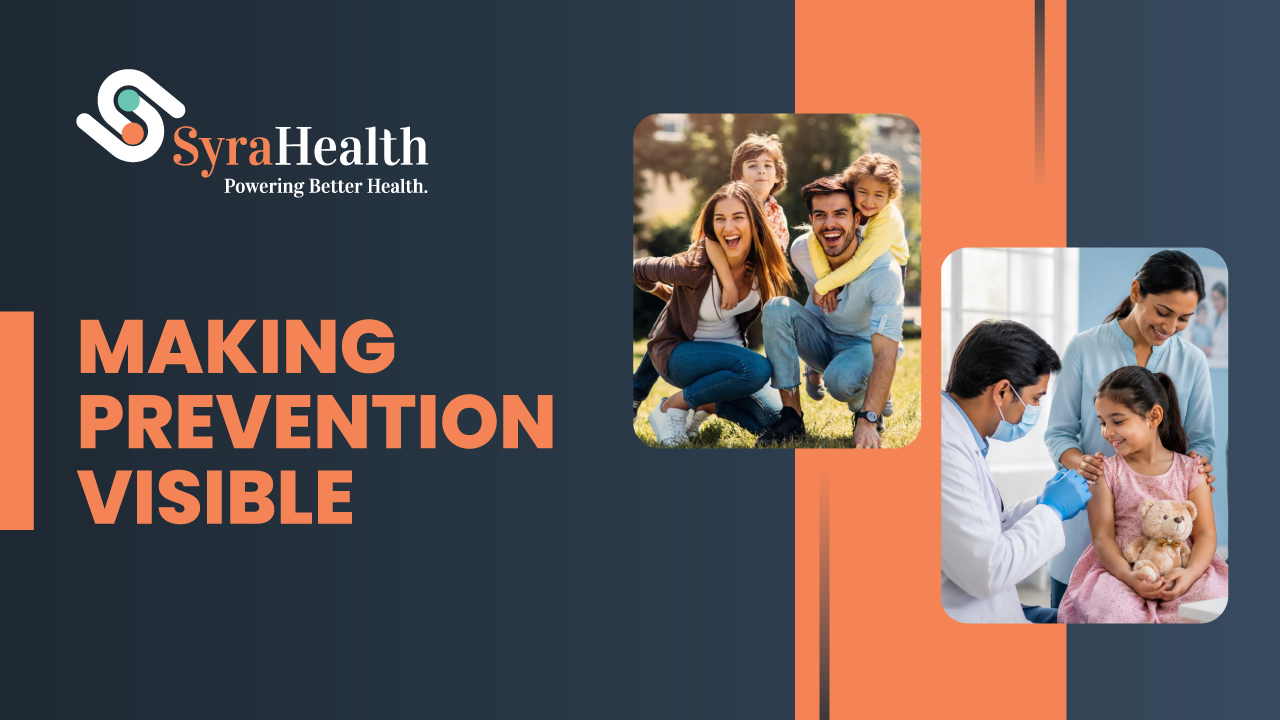
What Happens When Prevention Becomes Invisible?
Why National Immunization Awareness Month Still Matters
Vaccines have become so effective that many of the diseases they prevent can feel like problems of the past. Polio, measles, diphtheria, and other illnesses that once shaped everyday life are unfamiliar to many people today.
That is one of public health's greatest achievements. It is also why immunization can be easy to take for granted.
The Numbers Behind Prevention
The impact of routine immunization is difficult to overstate.
508 MILLION
Illnesses prevented
32 MILLION
Hospitalizations avoided
1.1 MILLION+
Deaths prevented
$2.7 TRILLION
Estimated societal savings
These are the projected lifetime benefits of routine childhood vaccinations for Americans born between 1994 and 2023. The same CDC analysis estimates approximately $540 billion in direct medical cost savings. [1]
Yet recent data show why continued attention to immunization matters.
Progress and a Persistent Gap
In 2025, approximately 116 million infants worldwide received at least one dose of a vaccine protecting against diphtheria, tetanus, and pertussis, while 110 million completed the three-dose series. [2]
But millions of children were still left behind.
13.5 MILLION CHILDREN
received no routine vaccines at all in 2025 [3]
Nearly 21 million children also missed their first routine measles vaccine dose. Global first-dose measles coverage remained at approximately 84%, while second-dose coverage was about 77% [3]
The challenge is visible in the United States as well. During the 2024–2025 school year, vaccination coverage among U.S. kindergarteners declined for every vaccine reported by the CDC. MMR (Measles, Mumps, Rubella) coverage fell to 92.5%, compared with 95.2% in 2019–2020 [4]
These numbers point to an important reality: developing effective vaccines is only part of the equation.
Immunization Is Also About Access and Trust
People miss vaccinations for many reasons. Limited access to healthcare, transportation challenges, workforce shortages, scheduling difficulties, language barriers, and unreliable health information can all affect whether someone receives recommended preventive care.
These gaps don't affect every community equally. Access to preventive care is closely connected to broader healthcare disparities that influence when, where, and how people receive care.
Confidence matters too. Misinformation and declining trust can make already complex public health challenges even harder to address.
Closing these gaps requires more than reminders. It requires accessible preventive care, trusted communication, and effective health education that helps people make informed decisions about their health.
There are encouraging examples of what coordinated action can achieve. Between 2023 and 2025, a global catch-up vaccination initiative delivered more than 100 million doses to 18.3 million children across 36 countries, including 12.3 million children who had previously received no vaccine. [5]
Making Prevention Visible Again
National Immunization Awareness Month is more than an annual reminder to check vaccination records. It is an opportunity to recognize what sustained prevention has achieved and what is required to protect that progress.
For healthcare organizations and public health agencies, that means using population health data to identify gaps, improving access to preventive care, strengthening community partnerships, and communicating with people through trusted sources.
Because one of the clearest signs that prevention is working is something we often never see: the illness that never happens.
Page References
All online resources cited in this article were accessed and verified in August 2026.
[1] Centers for Disease Control and Prevention. “Health and Economic Benefits of Routine Childhood Immunizations in the Era of the Vaccines for Children Program, United States, 1994–2023.” Morbidity and Mortality Weekly Report. August 2024.
https://www.cdc.gov/mmwr/volumes/73/wr/mm7331a2.htm
[2] World Health Organization and UNICEF. “Global Childhood Immunization Coverage Inches Forward Despite Conflict and Hesitancy.” July 15, 2026.
https://www.who.int/news/item/15-07-2026-global-childhood-immunization-coverage-inches-forward-despite-conflict-and-hesitancy---unicef--who
[3] World Health Organization. “Immunization Coverage.” WHO Fact Sheet. Updated 2026.
https://www.who.int/news-room/fact-sheets/detail/immunization-coverage
[4] Centers for Disease Control and Prevention. “Vaccination Coverage and Exemptions Among Kindergartners.” SchoolVaxView. 2024–2025 School Year. Accessed August 2026.
https://www.cdc.gov/schoolvaxview/data/index.html
[5] World Health Organization. “Largest Catch-Up Initiative Delivers Over 100 Million Childhood Vaccinations.” April 24, 2026.
https://www.who.int/news/item/24-04-2026-largest-catch-up-initiative-delivers-over-100-million-childhood-vaccinations